
A look at some old projects and art.
Untitled Farm Game:
At the start of 2024, I began working on a project with one other person with the intentions to have a published game. The game is still currently being developed, but the latest builds will be found here: https://github.com/ColeAtkinson27/Farm-Game-Builds/releases
The game is being developed in Unity, and is a simple farming game where the player can grow and harvest crops to sell, and expand their farm over time. Caring for crops includes watering and managing nutrient levels, as well as pulling out any weeds that sprout. The challenge comes with the game’s night cycle, when various critters will come out from the surrounding woods and attempt to eat the player’s crops. To combat them, the player can place down fencing to block them, as well as different types of traps to try and slow them down or fling them back into the forest.
Between the two of us, I have been handling the programming side, as well as adding in and adjusting the various UI systems, while the other party has been handling creating the game’s art assets. Due to prior obligations from my partner, the game currently uses a number of pre-purchased assets, which will be phased out and replaced as more custom assets are worked on.
Several of the game’s systems have been iterated on over time, with the most prominent example being the fencing. The original idea behind fencing was that it would be a way for the player to further customize the look of their farm, before it became a way to try and herd critters towards the player’s traps. It became quickly evident that unrestricted fencing made the game too easy, and so several attempts to remedy the problem were tested, such as not allowing the player to perform actions through fencing. The change that we were happy with was limiting the player to only placing down up to 5 connected blocks of fencing, which keeps the advantages of blocking paths for critters, while limiting the drawbacks.
At the time of writing, the latest addition is the variety of fencing levels, with higher levels costing more money, but is built much sturdier and can therefore be built in longer sections. The drawback to higher tiers of fencing is that they cannot be put back into the player’s inventory, while lower tiers can be. In the early game, as the player is still expanding their farm, the basic stone wall can be easily moved around, and in the mid and late game, once the player has a decent idea on how their farm will be laid out, they can put down the more permanent brick walls.
The Malevolence:
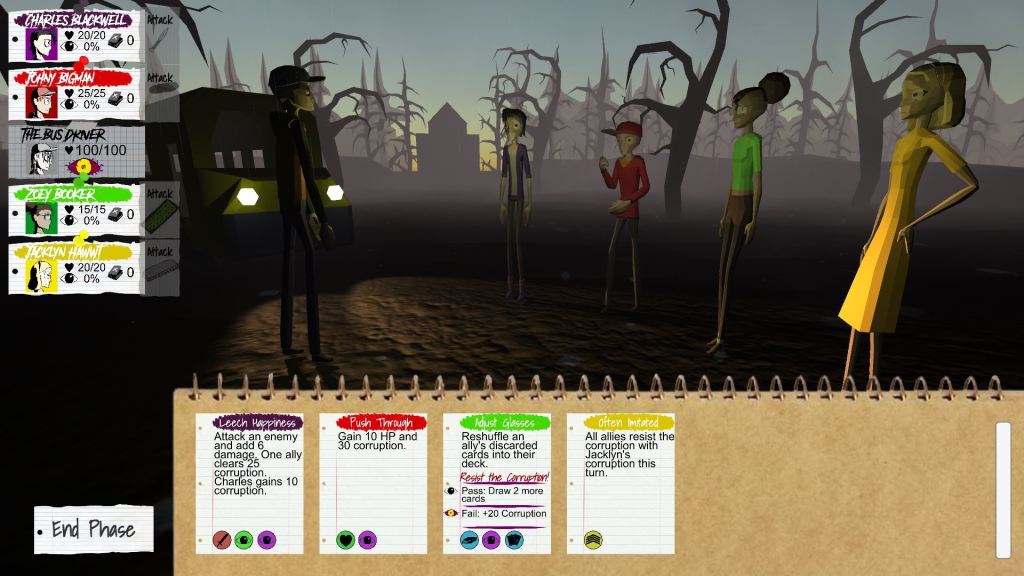
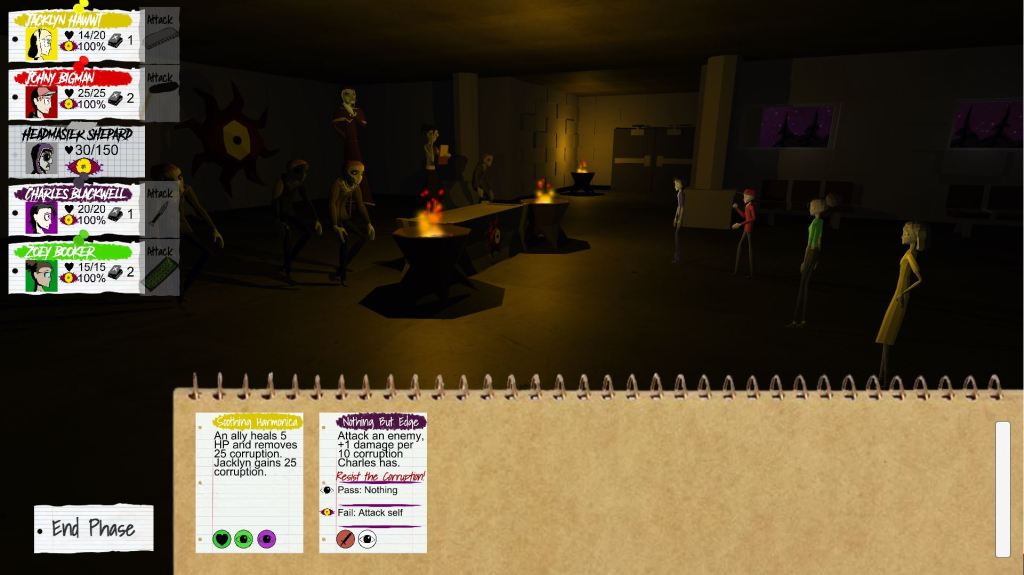
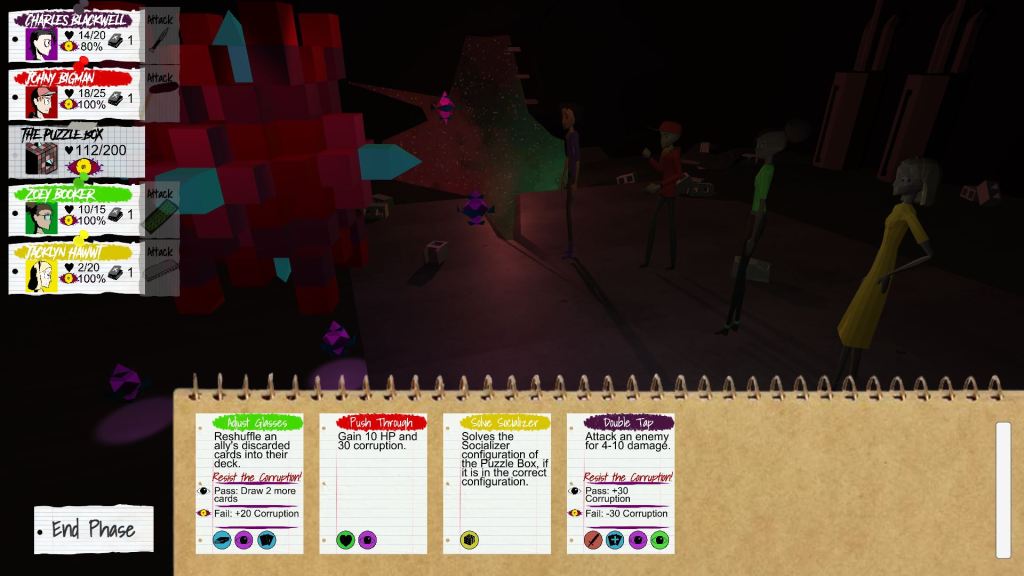
The Malevolence was a student project that was completed during my third year at BCIT, during 2021. The premise of the game is that you are playing as four high school students investigating the local high school after strange things start happening. The gameplay consisted of a turn-based strategy game where each of your party members abilities were cards that were drawn from their own unique decks. Each turn would consist of three phases. In the Draw phase, you would select one of the characters to draw from their deck. In the Planning phase, you would decide what cards each character would play. And finally, in the Execution phase, you would watch as the battle would play out. This encouraged players to plan their entire turn ahead of time, rather than as each character took their turn.
The game also used a “corruption” system, where cards would add or remove corruption from a character, while other cards would use a “corruption check”, rolling a random number between 1 and 100, and succeeding on the check if it was above the character’s corruption. The goal was to keep this number as low as possible, with powerful cards potentially serving as a double-edged sword. The game consisted of three bosses, ranging from a simple tutorial in the form of the bus driver, the more challenging Headmaster Shepard who would summon faculty and enthralled students to help him, and the difficult Puzzle Box that would switch between four different states with their own unique decks, but could also be defeated by “solving” the puzzle. The Entity, a secret fourth boss, was created to serve as a final boss if the player managed to solve the cube’s puzzle, but ultimately did not make it into the final build of the game, due to not enough time to properly test it.
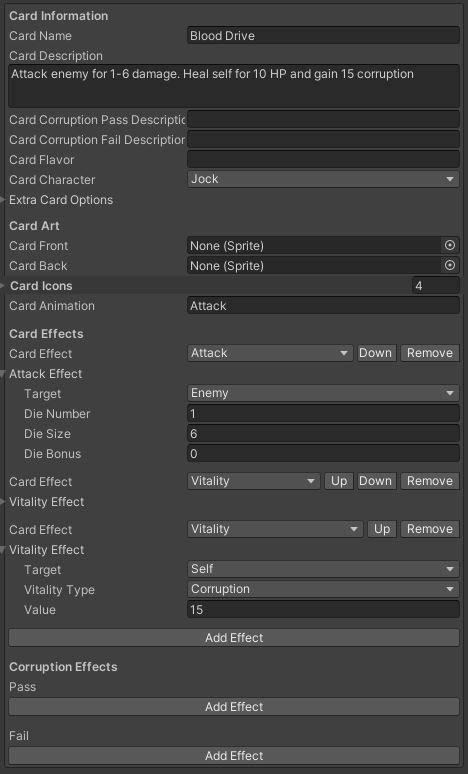
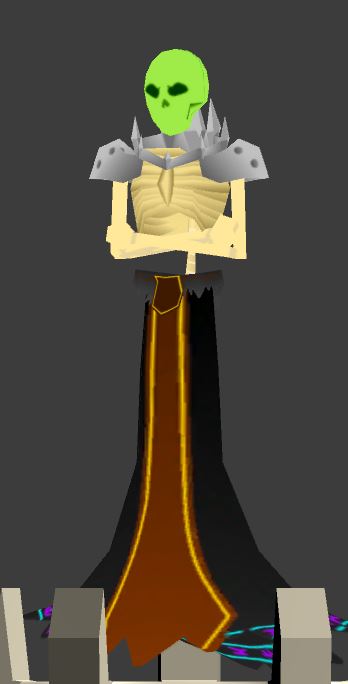
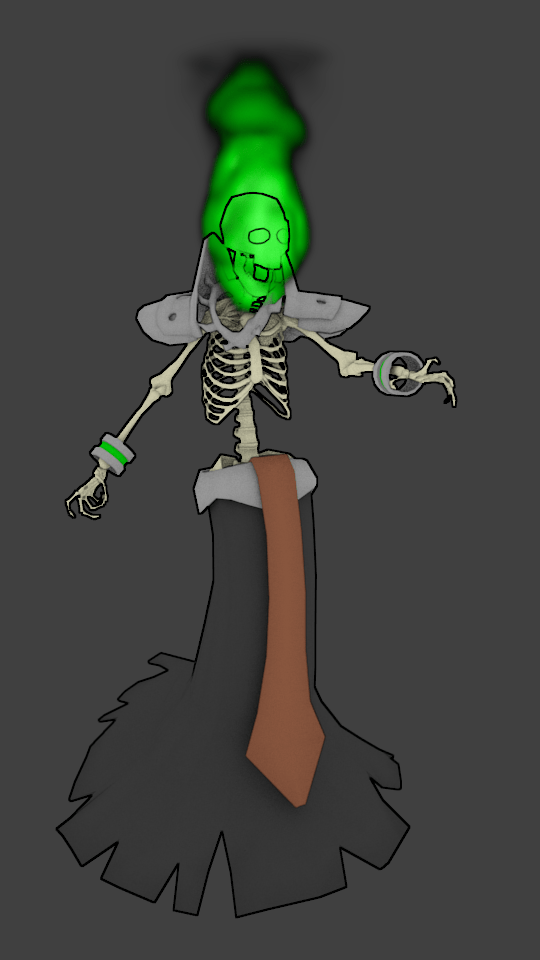
The development of the game took place over four months, with the work divided amongst four people. My role in the game’s development was initially in designing the system for how the card system would be implemented, which was done by creating a custom editor for Unity to be able to add, remove, or modify set modifiers on a card. Following that, I moved on to designing the player and boss decks, as well as working on the enemy 3D models, rigging and animation.

Soulbound:
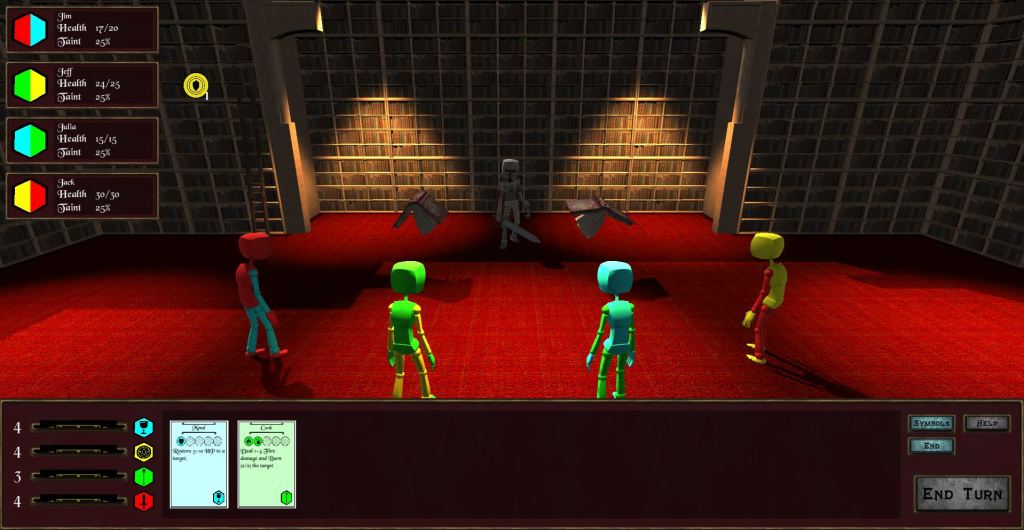
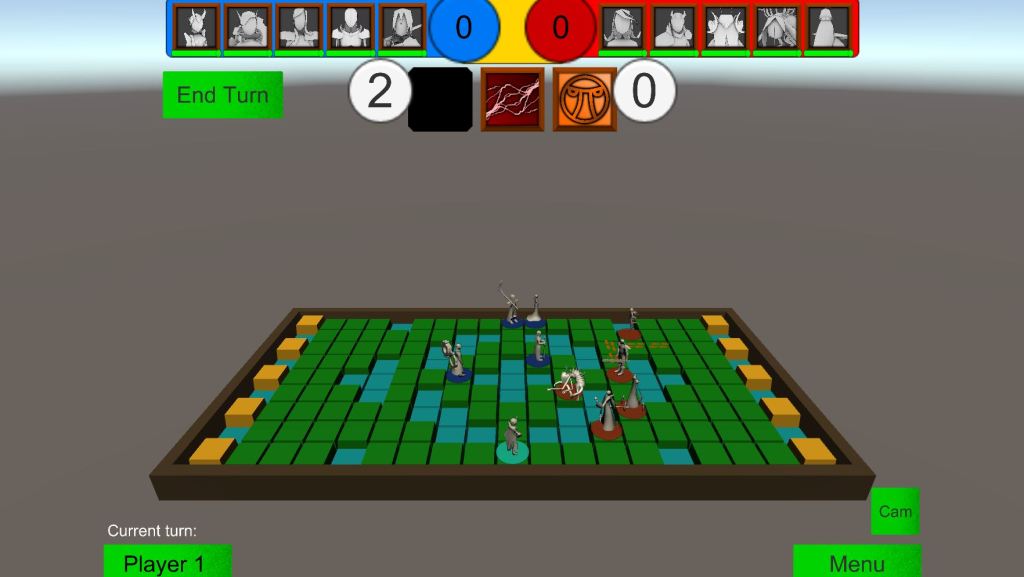
Over the months following the completion of The Malevolence, I had wanted to tweak the code I had written for the card system, as it had been written in a rush and was very inefficient. Thus I began to work on a side project that I simply named Soulbound, which had a similar playstyle to The Malevolence, but with a few tweaks. Most notably was how decks worked. Rather than each character having their own unique deck, each character could play any card from two of the game’s four decks. While The Malevolence’s code was used as a base for the project, the majority of it would be rewritten to be more optimized, with the card system reworked from the ground up to be more modular.
The story revolved around a strange world in between life and death, where souls would arrive via a river that would nourish them. As one travels further from the river, they encounter souls that have become twisted and deformed, called Denizens. Your party are from a town named Clearbrook that lies on the banks of the river, but was attacked recently by a number of powerful denizens and the citizens dragged away. Your goal is to go off and rescue the citizens, all while learning of the fickle nature of this limbo-like plane, and stopping a devilish denizen plotting to force open the Gates of the Hereafter rather than waiting for his peaceful passing. As such, the more Lovecraftian elements of The Malevolence were changed to fit the setting, such as corruption being replaced with soul taint: a measure of a character’s descent into becoming a denizen themselves, which would be refreshed after returning to the river.
The game used a motif of tarot cards, with the intended aesthetic being that the player is watching a puppet show. The gameplay loop would consist of the player battling through groups of lesser enemies in turn-based combat, unlocking checkpoints along the way, and defeating a powerful boss at the end of the level. Then they would return back to town where they could use materials dropped by the lesser enemies to upgrade their characters, buy new cards for their decks, and improve special trinkets each boss would drop. The first three areas were in development, with the Fool’s Playground being a tutorial on how to play the game, and the Magician’s Library and Priestess’ Chapel being more challenging and introducing the player to fighting through rooms of enemies. Unfortunately, due to personal reasons in the summer of 2022 at the time, the game had to be put on hold.
Floral Trauma:
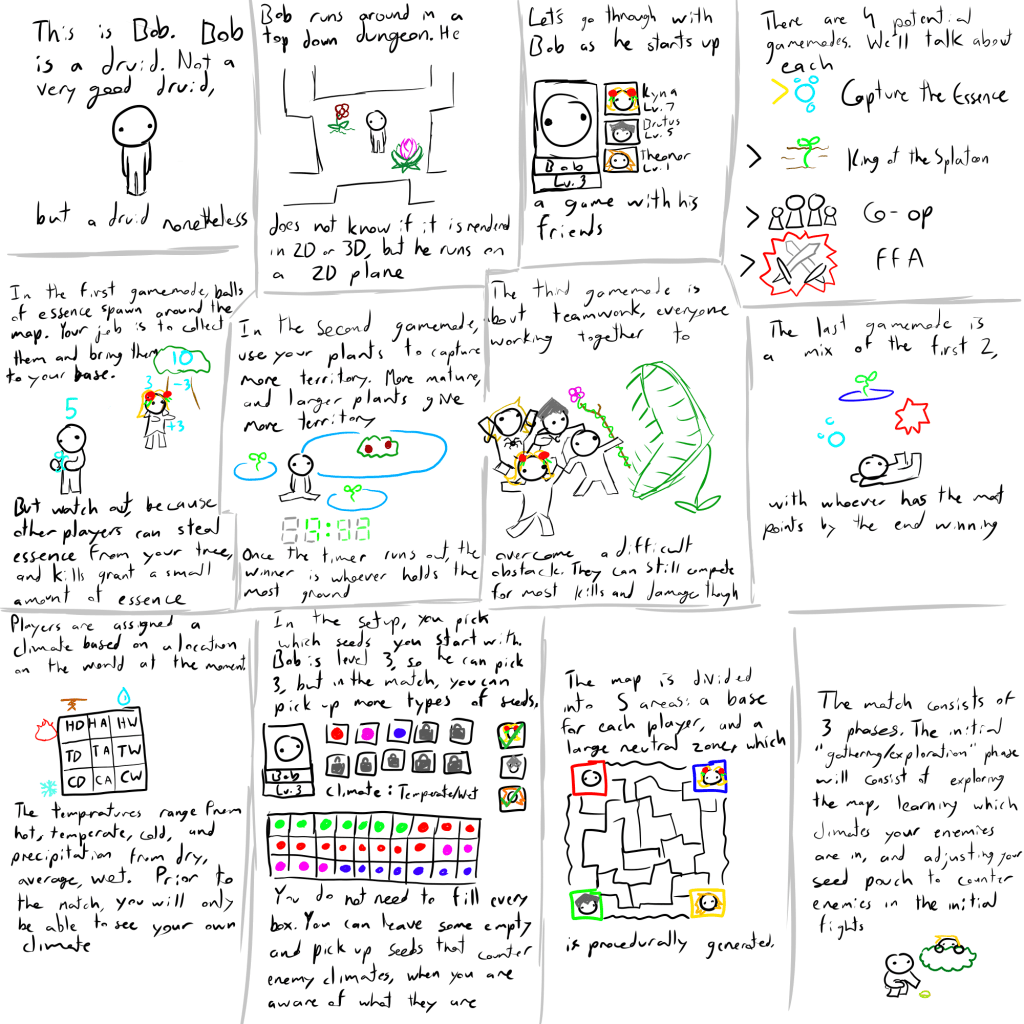
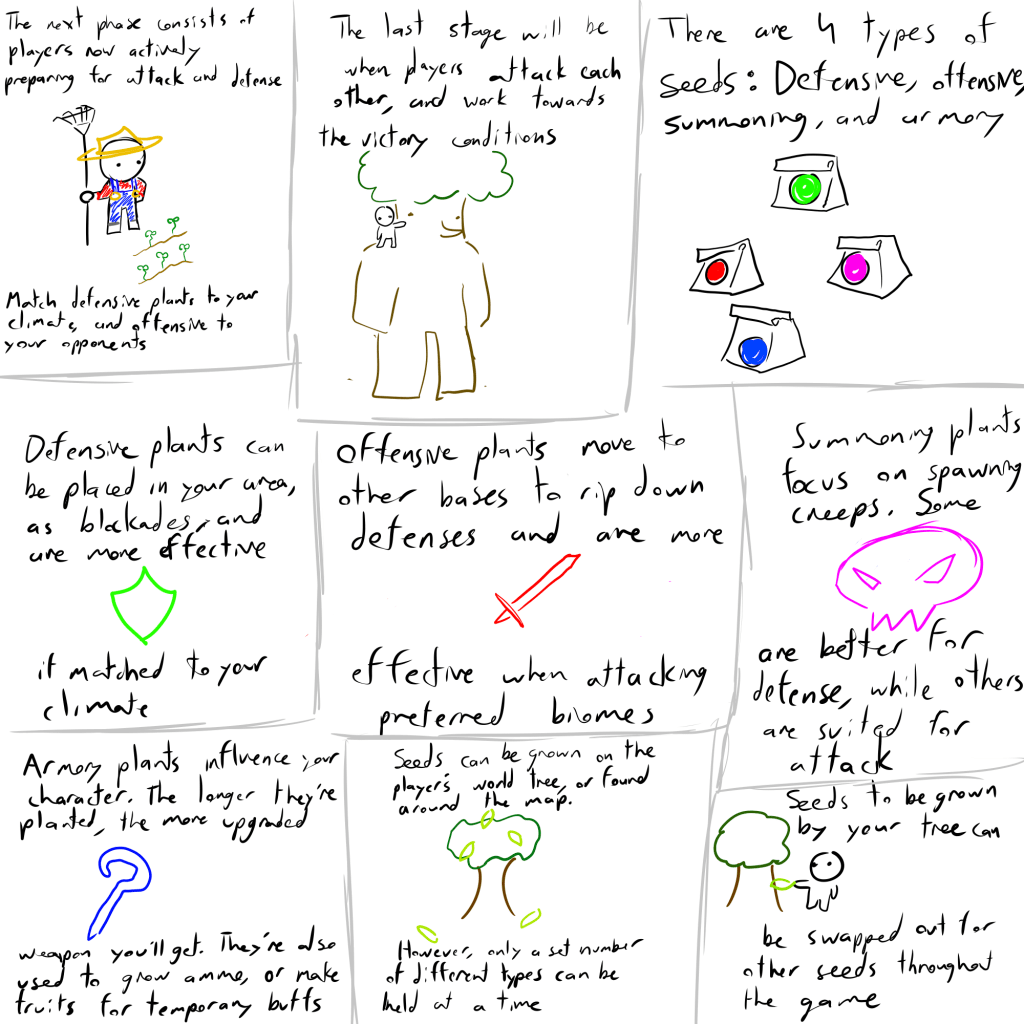
The first large-scale project that I worked on, Floral Trauma was the capstone project of my diploma that I completed in 2019. The purpose of the project was to include the entire class of 25 people and have us learn to work as a larger group, as opposed to the 2-4 people we had become used to. The game’s initial concept was that each player would control a druid and collect seeds to create defenses and offenses, with different plants working in different biomes. Each player would control their own biome on the map, with the goal of the game being to destroy the enemy’s World Tree, while protecting your own. Over time, this concept was altered and reworked into becoming the final project.
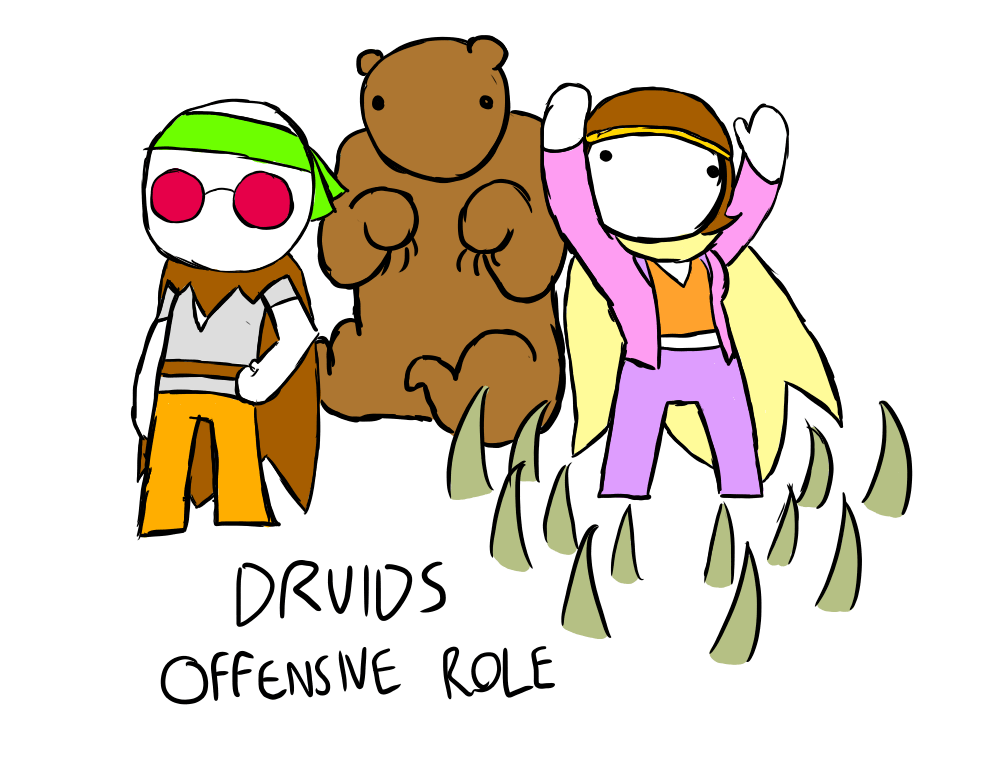
The game was an asymmetric overhead shooter between a group of druids trying to protect the last World Tree, and a group of capitalists trying to tear it down in the name of further profit. The druids would be able to plant various flora to serve as defenses for the world tree, which would contend with endless waves of businessmen minions that spawned on the capitalist side of the map. It was playable up to 4 players over a LAN connection.
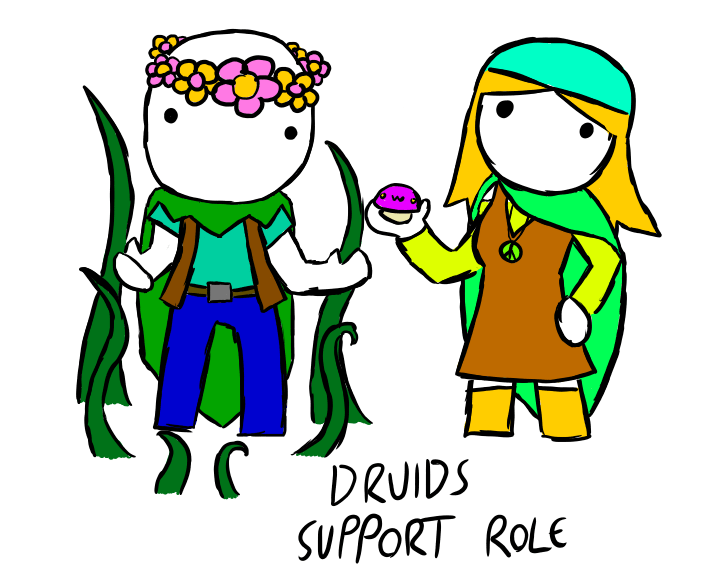
I worked on the design team, writing up a design document for the project and hammering out the details of the gameplay mechanics, before transitioning to the art team to work on the 2D splash art and 3D assets, including the modeling, texturing, rigging, and animating. The overall cartoony design of the game were based on some silly drawings I had done as an initial pitch of the game concept to showcase the game’s mechanics, which the rest of the team quickly fell in love with and wanted to be the game’s overall aesthetic.


Extra Art:
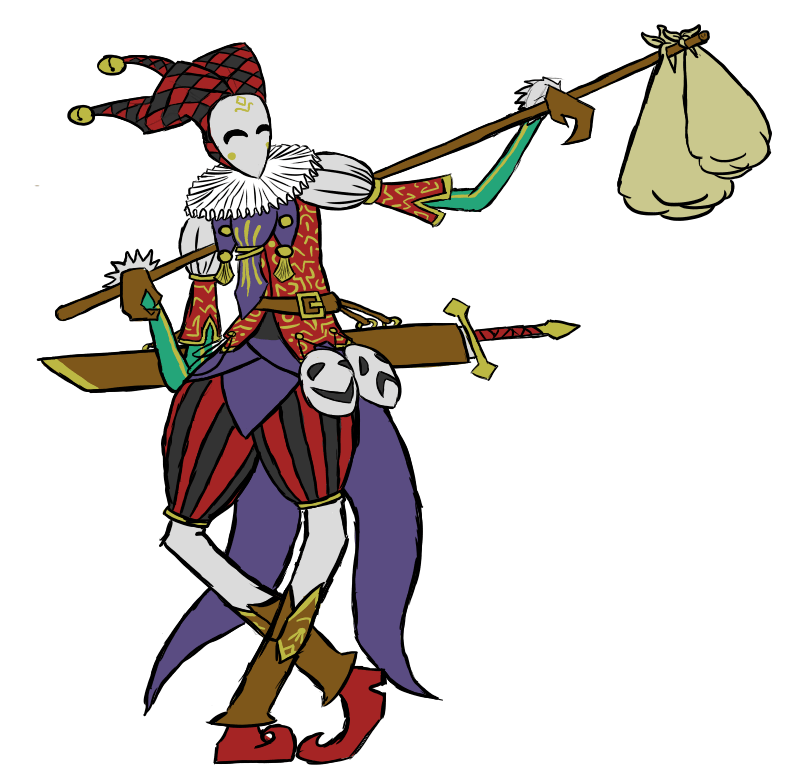
A collection of other projects and art that I have worked on in the past.


 Cole Atkinson Games